

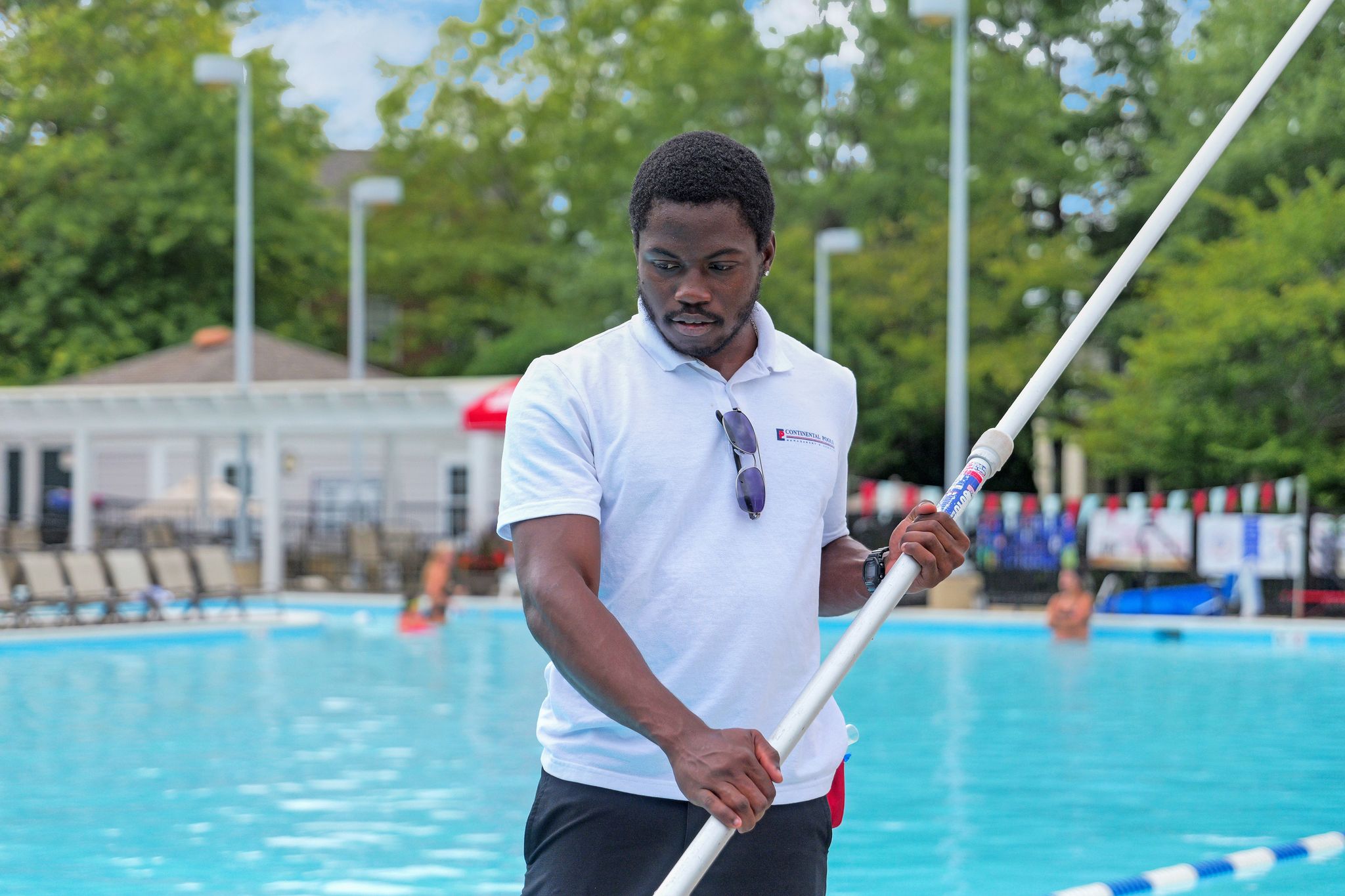
A closed pool isn’t an unattended one — here are the questions residents and boards ask most often about what happens between Labor Day and Memorial Day.
Does the pool need to be checked during winter?
Yes, and the reason is less about the water than the building.
A covered pool is a large object sitting outdoors through freeze and thaw cycles, storms and several months of leaf fall. Covers loosen. Water accumulates on top of them and then freezes. Drains block. Equipment rooms take on moisture. None of that is dramatic on any single day, and all of it is cheaper to catch in November than to discover in April.
The cadence depends on your facility and your winter. What matters is that somebody is going, that it is scheduled rather than occasional, and that what they find is written down where your board can see it.
What protects the pool from freeze damage?
Mostly the plumbing, which is where freeze damage actually happens.
Winterizing means lowering the water below the skimmers, clearing the lines and equipment of standing water, and closing the system so that nothing is left where it can freeze and expand. A cracked line under a deck is expensive precisely because the crack is invisible until the system is pressurized again in the spring.
The other half is the cover. It has to be secured properly, kept clear of accumulated water and debris, and checked after significant weather. A cover that fails in January usually fails because nobody looked at it in December.
Can we save money by skipping winter service?
Sometimes, and it is worth being honest about that rather than pretending otherwise.
What you are actually deciding is whether to trade a known small cost for an unknown larger one. The known cost is the visits. The unknown is a cracked line, a failed cover, or a filter that spent five months holding water it should not have. For a newer facility in a mild winter, that trade sometimes makes sense. For an older system, it rarely does.
Ask your operator which components on your specific property make the decision go one way or the other. That is a better conversation than a general one about value.
When does spring prep start?
Earlier than the calendar suggests, and it starts with people rather than water.
Recruiting and certification run through late winter, because a guard cannot be certified in the week before opening. Equipment work is scheduled off the back of what winter inspections found. Chemistry gets started well before Memorial Day, because bringing a pool up takes longer than most boards expect and there is no way to rush it.
If your opening weekend regularly feels like a photo finish, the fix is almost always in February.
What should our board be doing in the off-season?
Three things, and none of them take long.
Ask for the season’s documentation at close-out while people still remember the details. Settle the contract and the budget in the fall rather than the spring. And get somebody from the board into the equipment room alongside the operator once a year, so the reserve line is built on what is actually in there rather than on a replacement date somebody assumed.
Continental Pools looks after 700 facilities, and has done this kind of work in this region for 25+ years. The winters are quiet. They are not empty.